
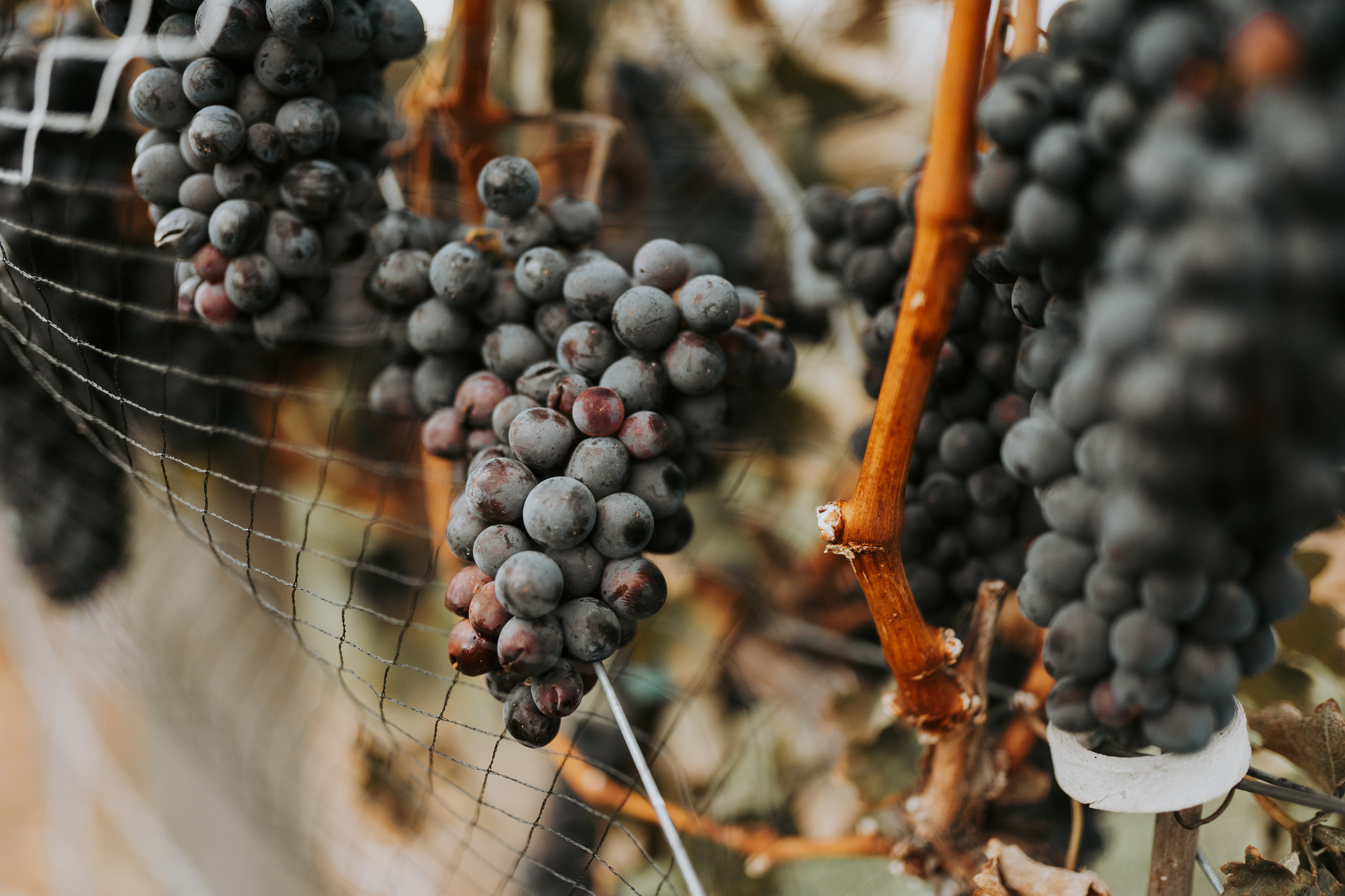
Drive east from Hood River and watch wine country transform around you. Cool, green vineyards give way to golden hills, dry air, and wide-open high-desert country, with the Columbia River threading through it all.
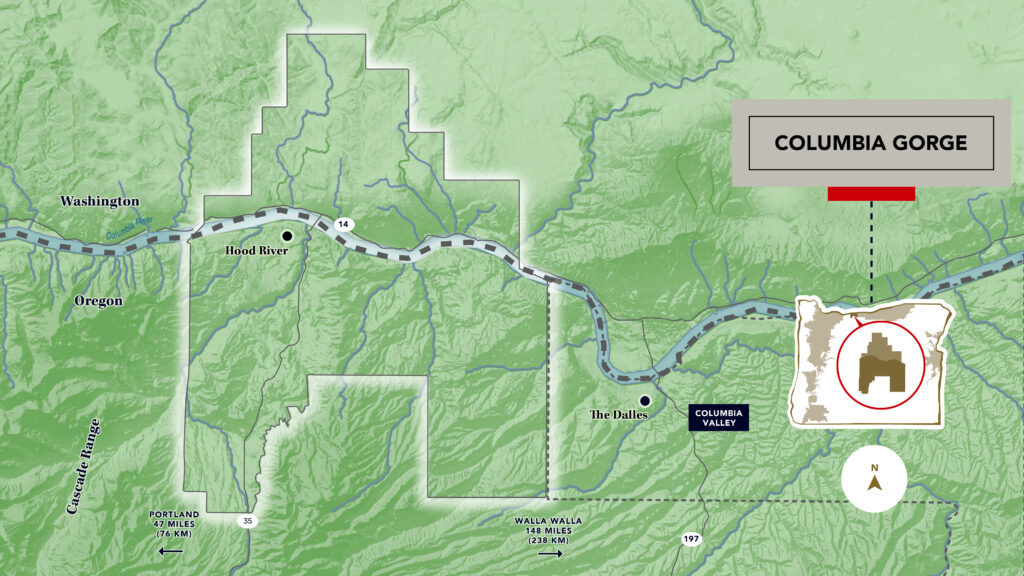
It’s hard to believe you’re still in the same wine region. That’s the magic of the Columbia Gorge AVA, where dramatic shifts in climate, elevation, and rainfall create room for an extraordinary range of grapes and winemaking styles. The western Gorge receives about 36 inches of rain annually, while the eastern end gets as little as 10 inches.
From a viticulture perspective, the western Gorge is cooler and more maritime, warming and drying as you travel farther inland. Persistent winds through the Gorge add another layer, cooling and drying vineyards throughout the growing season.
The result is a wine region that doesn’t fit neatly into one style. Pinot Noir, Pinot Gris, Chardonnay, and Riesling thrive in cooler western sites, while warmer vineyards can support Cabernet Sauvignon, Syrah, Sangiovese, and Zinfandel. More than 40 grape varieties are grown across the region.
And you don’t have to leave Hood River County to taste that range.
Cathedral Ridge Winery works with 13 vineyard partners on both the Oregon and Washington sides of the Columbia River, producing more than 30 wines, from Pinot Noir and Chardonnay to Syrah, Zinfandel, and Bordeaux varieties. Its Columbia Gorge Pinot Noir from Dampier Vineyard on Underwood Mountain offers an ideal taste of the region’s cooler, higher-elevation side.
At Evoke Winery, a long-running relationship with Ziegler Vineyard on Underwood Mountain brings Washington-grown fruit into the mix. The partnership began with Tempranillo and later shifted to Pinot Gris, a fitting example of how growers and winemakers adapt to the Gorge’s individual sites.
Phelps Creek Vineyards focuses on cool-climate wines, with estate vineyards in Hood River and additional vines on Underwood Mountain. Pinot Noir and Chardonnay lead the lineup, joined by varieties including Pinot Gris, Riesling, and Gewürztraminer.
Stave & Stone Wine Estates grows everything from Pinot Noir and Chardonnay to Syrah and Zinfandel in the Hood River Valley, while Marchesi Vineyards takes an Italian approach with Barbera, Sangiovese, Nebbiolo, Primitivo, and Dolcetto.
At Mt. Hood Winery, the Bickford family’s century-old farm brings together orchards, estate vineyards, and mountain views. Just down the road, Wy’East Vineyards takes advantage of higher-elevation vineyards, volcanic soils, and cool nights along the Fruit Loop.
Downtown, The Pines 1852 offers limited-production wines from the Columbia Gorge and Columbia Valley, while Cascade Cliffs Winery brings Barbera, Nebbiolo, and other Italian-inspired varieties into the Northwest mix.
Then there’s Hood Crest Winery, whose estate vineyard in the lower Hood River Valley sits within the Columbia Gorge AVA, planted in the gravelly soils of the Rockford Reach.
No single signature grape or style defines gorge wine. It’s the freedom to follow the landscape.
Start with Pinot Noir in Hood River. Drive east and the vineyards change. Cross the river, and the conditions shift again. The wines follow.
The scenery changes, too. Vineyards give way to orchards, basalt cliffs, rolling wheat country, and wide mountain views, with Mount Hood and Mount Adams defining either side of the Gorge.
The Gorge isn’t trying to be another Napa, Willamette Valley, or Walla Walla. Its appeal is the opposite: no uniform climate, no single signature grape, and no dominant style. There are dozens.
And that’s the best way to understand Columbia Gorge wine. Start in Hood River. Taste something cool-climate. Drive east. See what changes.